Programs

Choreographic Projects

CO:LAB

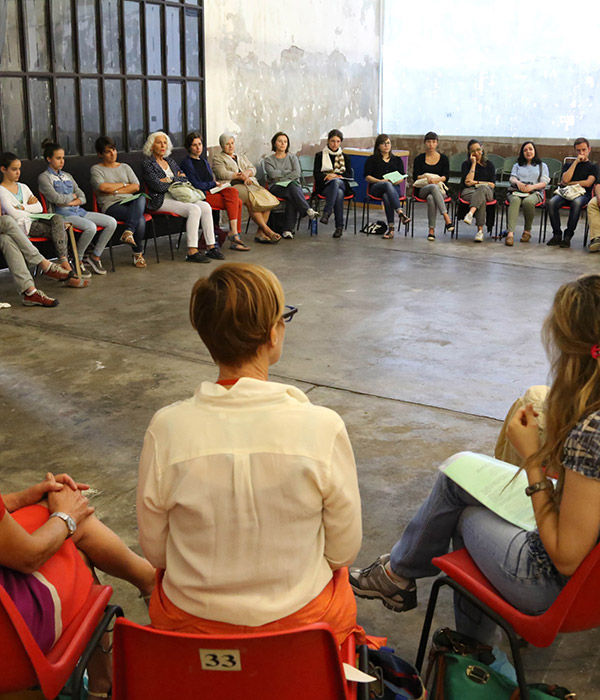
A Dance Centre and Canadian Music Centre project, CO:LAB was a ‘collaborative laboratory’ where six choreographers and six composers came together in the studio to explore the infinite possibilities of contemporary interdisciplinary creative process. The concept of CO:LAB is to provide an opportunity for artists to share, challenge and surprise each other creatively, provoking new ideas and opening dialogue without the pressure of a final production. In fall 2012, CO:LAB was led by creator/directors Martha Carter, John Korsrud and Lee Su-Feh facilitated the activities.

Composers
Christopher Reiche, Adam Hill, Viviane Houle, Michael Park, Dorothy Chang, Edward Henderson
Choreographers
Barbara Bourget, Paras Terezaki,  Daelik, Deanna Peters, Troy McLaughlin, Julianne Chapple

____________________________________________________

Triptych

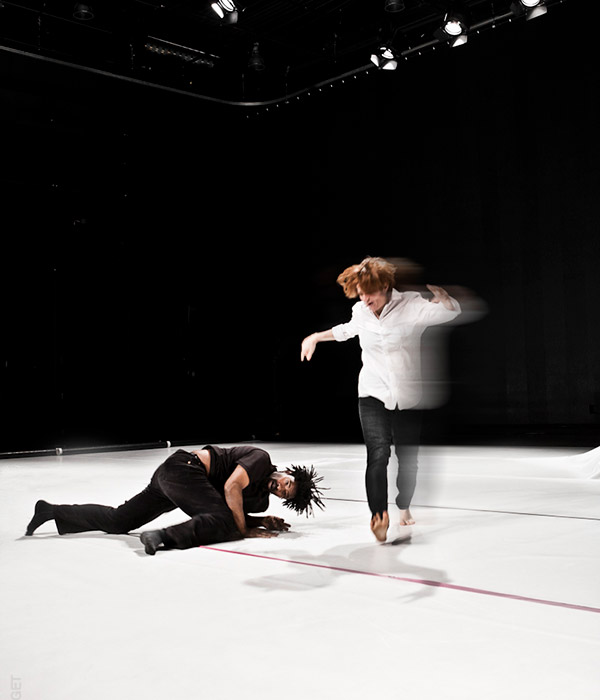
Triptych (August-November) is an international choreographic project hosted by the Opera Estate Festival Veneto, Italy; Circuit-Est Centre Chorégraphique, Montreal; and The Dance Centre, Vancouver. Three choreographers from each city come together in each of the host locations to undertake choreographic research.

Triptych 2012 artists: Marco D'Agostin* (Italy), Peter Trotzmer (Montreal), Ziyian Kwan (Vancouver). Dramaturg: Ginelle Chagnon
Triptych 2011 artists: Sylvia Gribaudi (Italy), Jacques Poulin-Denis (Montreal), and James Gnam (Vancouver). Dramaturg: Guy Cools
Triptych 2010 artists: Chiara Frigo (Italy), Emmanuel Jouthe (Montreal) and Jennifer Clarke (Vancouver). Dramaturg: Guy Cools

*Marco D’Agostin’s participation is supported by: Con il sostegno di/supported by progetto DE.MO/Movin'UP2012 A CURA DI/CURATED BY Ministero per i Beni e le Attività Culturali DG PaBAAC - Direzione Generale per il paesaggio, le belle arti, l’architettura e l’arte contemporanee CON LA PARTECIPAZIONE DI/WITH THE PARTICIPATION OF Direzione Generale per lo Spettacolo dal Vivo E/AND GAI - Associazione per il Circuito dei Giovani Artisti Italiani www.giovaniartisti.it

Read more about Triptych:

Utopia and Catastrophe: performing research
by Andreas Kahre

Wednesday November 28, 2012

This is the third and final stage of the process, and marks the end of the project—not in the sense that a final work emerges, but that it constitutes a final opportunity to reflect on the individual and collective research, on the relationships that have developed and informed the process, and to explore the process in a different architectural and geographic frame.

Visiting the studio during the first week, it soon becomes apparent that the location has a profound impact on the process. Marco especially remarks on the ‘aseptic’ quality of the studio space; its stark, ‘fishbowl’ architectural that bears no trace of what has come before and will take no imprint from the work taking place now. This clearly contrasts the setting in Bassano, for example, where the physical frame imposes and reflects its own history.

Can one begin a sentence without knowing how it will end?

It also becomes apparent that the process itself is still very much a matter of negotiation and discovery, and for an afternoon, the question of the relationship between the choreographers’ individual research and their shared frame for exploring movement in this space dominates the discussion. Language is very much a part of the negotiation, framing and preceding, defining and excluding the movement. It is apparent how delicate the balance of their experiences, and how they express them, remains, and that the transition from working mostly individually, as they did during the first two stages of the process, to working collaboratively, or collectively, is in itself a delicate negotiation.

‘Dramaturg' (she expresses discomfort with the term) Ginelle Chagnon reflects on the outside experience of the experiment, and acts as witness to the negotiation of the choreographers individual experience; they continue to search for a ground that includes aspects of their individual research and to explore the question of what is brought into the room from research outside of the project. What is the framework for exploration, and the balance between the work that each brings from their own practice with the work they create together, in this space, at this time?

“For me, chance and choice are inseparable. Without one there is not the other and yet, neither actually exist.” Ziyian Kwan

Considering that this is the last leg of a long journey, it is surprising to see how fundamental the questions being asked are — on other words, I realize that I had arrived with the tacit assumption that I would be witnessing a process that had developed a shared ‘project culture’. What I discover instead is very much a process of questioning, and of true research.

What is the proposition? The question re-appears several times as the group reflects on the result of the physical exploration, and curiously their individual abilities don’t seem to make it easier to negotiate a shared response. As Ginelle points out, all three are exceptional performers, and could create something interesting to watch, no matter whether they agree or not. But what is the conceptual and the physical frame of the experiment? They talk of glass, of transparency and opacity, and for two days I witness negotiations that relate to a space of readiness, of waiting for something to arise, and for the conditions under which it can be explored or expressed. Can one begin a sentence without knowing how it will end?

There appears to be both a shared and a separate search for connections, for sources and for the impulse to move together. Time becomes a central aspect of how they negotiate their presence in the physical space and the movement space, and all three attempt to articulate the premises they operate from. Tension between descriptions of the internal states and the formal frame. For a while I sense a language impasse.

The studio space becomes part of a discussion that ranges from the history of Vancouver’s location at the edge of three tectonic plates to the history of its dance community, and the fact that the building serves a dual role as a disaster response centre becomes a point of departure to reinterpret its role. It is the future of the space that informs the research for the next few days, leading to a collective movement exploration based on a theme: dance after a catastrophe.

“It’s not about improvising together” Marco D’Agostin

It is not an improvisation, however, although the frame remains open, but a deliberate framing of the movement. Physically, a set of ideas centered on circular and spiralling motion grounds the exploration, and over the course of more than twenty minutes develops into an almost hypnotic motif. The formal restrictions are challenged at several points, especially in the individual explorations — framed in the narrative as ‘rescue missions’— but the narrative sustains the ‘apocalyptic’ quality to the space and the movement.

Two days later, the exploration has moved in to Faris Family Studio performance space, and it has become a duet: Ziyian decides to continue with her individual research, while Peter and Marco explore the hypothesis of the Dance Centre as a post-apocalyptic space. The circular motif remains — now referred to as the ‘generator’, and the ‘rescue missions’ expand into more complete explorations, both of the space and as forays into realms of character and relationship.

The conditions of the space are now negotiated in terms of text and subtext, and in their relationship to sound, and Ginelle’s role becomes more active as the exploration becomes more focussed on including an audience. Which will be witnessing an extraordinary group of dance artists very much in the thick of a process of discovery. It is true research, and I look forward to the experience of seeing how they present the process in tomorrow’s sharing event.

Many thanks again for letting me witness and participate.

Andreas Kahre

Photos by Ginelle Chagnon

Triptych: a research project on choreography Guilia Galvan's blog follows the Italian sections of the project 2010-12.

Archiving Triptych
By Alana Gerecke

Monday November 21, 2011

I join James Gnam, Silvia Gribaudi, Jacques Poulin Denis, and Guy Cools in the studio during their second week of research in Vancouver.  Right away, I become acutely aware that the Vancouver installment of Triptych is phase three in a three-phase project.  A choreographic research project co-supported by the Opera Estate Festival Veneto (Italy), Circuit-Est Centre Chorégraphique (Montréal), and The Dance Centre (Vancouver), Triptych has already taken this group of three dancer-choreographers (James, Silvia, and Jacques) and their dramaturge, (Guy) to Bossano and Montreal in recent months.  In each of these cities the artists have gathered with a mandate to experiment and explore; both the most challenging and refreshing component of this movement research process is that it does not culminate in a formal, final-product performance.

On this rainy Monday, we meet in EDAM Dance’s studio space in the Western Front building – an old community hall turned artist-run centre.  The sign hanging above the door to the studio reads:

The role of place in the Triptych crew’s research is, it goes without saying, primary.  But place has been of particular concern in Vancouver, where these artists have been migrating from studio to studio, based on availability of space in the midst of a very busy Dance in Vancouver rehearsal schedule. The warm wooden floors and the palpable feeling of history in the EDAM space inform the work.

After describing to me what they explored in Bossano and Montreal, the trio tells me that they had intended to pick up where they left off in Montreal, but when they got to Vancouver they found that they were simply – and perhaps predictably – in a different place.  Jacques explains: “in Vancouver, we’re not into that at all. We’re kind of into…” he laughs, “we don’t know what we’re into.”

Switching gears from recounting the trio’s past choreographic curiosities to a focus on the present, James pulls out a bag full of groceries: seeds, corn nuts, sour keys, caramels – an assortment of munchies that he introduces piece by piece.  He tells me that they are interested in what food might bring to their research.  Specifically, they want to explore the ways in which food implicates the bodies of the audience members.  To eat is to make physical a link between inside and outside, between the private, inner organs of the body and the public, external realm.  What might this momentary but deeply felt collapse of outer into inner bring to a performance?

Tuesday November 22, 2011

After a fifteen minute improvisation wherein, for example, James dances a tender, tripping solo while Silvia and Jacques watch and apologize in broken and repeated niceties – “excuse me,” “oops,” “I’m sorry,” “these things happen” – the three, with Guy contributing from the sidelines, return to a discussion of food.  Silvia finds the input from the food within the improvisation overwhelming: the leaking can of soda she drinks, the pork puffs James tastes and attempts to feed to a handstanding Jacques.  It is as though the food is another person, Silvia says, with its own set of suggestions and even demands within the already active improvisation. 

The group spends some time discussing how working within temporal parameters – with a time limit – triggers a compositional mind.  Within a twenty-minute long improvisation, they find themselves generating a beginning, a middle, and an end.  The improvisations that are timed end up being, in James’ words, more “consumable” and “digestible.”  They are more neatly packaged.  (That the group discusses this idea while surrounded by a scattered array of food research materials seems apt: processed food, after all, is an everyday epitome of the ease of consumability and the high-gloss of appealing packaging.) 

Wednesday November 23, 2011

Today, the trio is improvising when I arrive. Having spent two days at EDAM, we are back at The Dance Centre.  In what has now become a familiar structure, the trio improvises on, around, and with three folding chairs.  The three chairs anchor the improvisation, Silvia tells me. This is something they discovered in Italy, developed in Montreal, and carried to Vancouver.  “It’s a place to start,” she says.

The practice today is structured by decreasing time allotments.  Something like this: a twenty-minute improvisation followed by a ten-minute, and finally a five-minute improv.  This structure, a “reduction,” has also been a thru line of the trio’s movement research for their six weeks of Triptych exploration.

Heading into a 20-10-5 series, Jacques, James and Silvia debate whether or not to include food.  Where exactly the decision lands is unclear – and not just to me.  As the conversation winds down, Silvia clarifies: “so, no food?”  Jacques responds: “No. Yes. No.”  But when James enters the space with a cup of chocolate covered espresso beans, the choice is made.

The beans sound like rain when they roll across the grey marley.  In this rainy city, the sound is familiar, comfortable.  The small, dark pieces are flung through the space: tossed at open mouths, aimed at turned backs and empty coffee cups, brushed aside by socked feet, flicked toward the edges of the room.  These little beans roll and settle, forgotten for a spell before they are flicked, brushed, scooped up, tossed, and rolled again.  Traces of movement stilled, they hold the space with both memory and possibility.

When the time is up, when the dancers are done, the studio is strewn with objects.  Two empty cardboard coffee cups, three black folding chairs, and dozens of beans.  The remnants of performance.

Thursday November 24, 2011

I arrive to learn that when the bag of food they had left behind at the end of yesterday’s rehearsal was gone.  The group has been going back-and-forth about the use of food throughout the week, so this presents an opportunity to have a food-free day.  They reflect on how food – the little chocolate covered coffee beans that featured so prominently in yesterday’s rehearsal – changes the relationships between the dancers.  I ask how the explorations felt without food; Jacques responds: “I don’t miss it, but I want it back.”

They discuss what they plan to share at tomorrow’s studio showing.  They decide to decide tomorrow.  They discuss the merits and complexities of finishing their show with a talkback session.  Jacques sums up his sense of things: “it’s important, I think, to have an exchange about it.  Even if just to validate that something happened here, you know?”

Friday November 25, 2011

Today, in the thick of the Dance in Vancouver programming, The Dance Centre is filled with easy-come, easy-go, informal studio showings.  Shortly after 1pm, viewers/audience members drift into the studio and find a spot to sit on the floor or on a folding chair set up around the perimeters of the space.  Although there is a condensed cluster of viewers seated along one wall, there is no front.

After a description of what the trio has been researching during their Triptych exploration generally, and in Vancouver specifically – they launch into their “reduction” score: a twenty minute improvisation, followed by a ten minute condensation, and by a further five minute reduction.

The three stages of the improvisation reference one another, but never entirely repeat.  The first and longest improvisation features a reoccurring song with the refrain, “I’m boring; I’m boring; I’m very, very boring,” where “boring” is a placeholder later swapped out for “sexy,” “attractive,” and “interesting,” among other adjectives.  This phase of the improv ends with Silvia and Jacques play-kissing in a corner of the space while James watches with seeming disdain. 

In the ten-minute improv, the corn nuts make an appearance – in fact, they end up all over the floor – and the improv ends with Jacques deferring his physicalized promise to aim a corn nut into James’ mouth from across the room. 

In the final improv of the set, the artists distribute paper cups of soy nuts amongst the audience (I hear murmurs of “good – I was hungry!” around me) and three cans of soda make their way into the dance space.  This final section ends with a strange and satisfying anticlimax: following the build-up of a vigorously shaken pop can, the can is opened to a meager fizz.  The anticlimax reads of the faces of the dancers, who clearly expected more drama, but they agree: “it’s an ending.”  And it is.

Guy, James, Silvia, and Jacques invite viewers to stick around for a talkback session.  The discussion turns quickly to an exploration of “the permission to fail,” and how this permission can serve the creative process.  When pressed to define “failure,” each has a slightly different response.  But they agree this process allowed them to pursue choices that didn’t immediately feel interesting; something that, when pressured to create a final product, they likely wouldn’t spend time exploring.  During this process, where exploration itself is the final product, the artists felt freedom to spend time developing ideas and propositions they might not have bothered with otherwise.  Which is one good way to access work you haven’t seen before or made before – to arrive somewhere new.

As an artist, you can’t help but respond to your creative environment, and so the work you make pivots on the interests that preoccupy your artistic community.  It is in gaining distance from your context by traveling or by working with artists from other communities – an underlying idea of the Triptych project – that you get a chance to think and move your way into different communities and different concerns.  And this dis or re-placement allows you to see more clearly what it is that you are interested in investigating.  Out of your context, you are able to see what’s left behind.

September 2011, the number 3
By Guy Cools

The number 3 is at the centre of the Triptych project: 3 editions - 2010, 2011, 2012; 3 cities- Bassano del Grappa, Montreal, Vancouver; 3 choreographers – Silvia Gribaudi, James Gnam, Jacques Poulin-Denis for the 2011 edition; 3 meetings - August in Italy, September in Montreal and November in Vancouver. Other than that, very few parameters were defined prior to the first meeting, except for the core idea that they will develop individually through exchanging and sharing with the others. This year, the three choreographers decided to go even deeper in the idea of “triangulation”; to work together all the time on common proposals; to create a triangle around a centre of common interests yet respecting each other’s individuality and uniqueness. Throughout the process, they continue to rely on their shared intuitions, while at time continuing to question. For example: to what extent do we have to define or structure? To what extent can we keep the process open? Specific themes are defined and then change from one local to another. For example, the attention to sound and listening ability in Bassano changed to vision, perspective and focus in Montreal.

The structured improvisation proved to be the most appropriate method, because improvisation is like conversation. We build over a shared past in the present moment, a present redefining itself constantly without predetermining the path or the conclusions. At the end of this second step in Montreal, Silvia, Jacques and James invited the public to join those triangles they had woven, thus multiplying the potential centers of a shared experience.

Images and memory[ies] from Montreal
By Catherine Lalonde

Three choreographers from three cities: Silvia Gribaudi, Jacques Poulin-Denis, James Gnam. Three stops in each of their respective cities: Bassano del Grappa, Montreal and Vancouver. For this edition of Triptych, the artists chose to think, search and compose without any ultimate goal, under the outside eye of dramaturge Guy Cools. Simply and together. Vignettes, memories and impressions of the Montreal stop of this three-headed creation, in Circuit-Est studios, from September 12th to 23rd, 2011.

What remains of Bassano del Grappa once we have left and we then meet in Montreal? James, Jacques and Silvia already share a past when they meet again in Circuit-Est studios. Those first two weeks of exploration in Italy reappear here, under all kinds of faces and peaks. Like for example this coincidence to end up in a church again, here renovated. "Do you remember the dust in the church in Bassano?" Jacques will ask Silvia. Here come three chairs again, used in the Italian improvisations, which become here, across the Atlantic, the essential part of the set, the start and finish point of the explorations when the three dancers sit there in line. Some memories of research also come back: the "Protector", redone by Jacques in the late afternoon light coming through the old church skylight to make Silvia and James laugh. Back is the urge for an Italian-style aperitif secco o dolce when the three artists stretch, lying on the dance floor at the end of a day. And also back is everything that escapes the eye that has not followed them every day since their first meeting. They already have a common past and a common space of exploration. They refer to what they lived, here or there, take up again, forget. They build a language.

Jacques, Silvia and James continue with their initial idea: to create as three-equal-minds, an unbreakable triumvirate. By engaging and indulging in the pleasure of searching, without specific goals, without a final show, they are puzzled by this final public presentation which does not meet their desire for pure research. The necessity of the presentation forces them to set a methodology and to define the work. Guy Cools, the dramaturge, will sum it up perfectly: Silvia, James and Jacques devise through tests, games, exercises and improvisations, as if undertaking a laboratory experiment. In this laboratory everything feeds the experience: discussion, to dance or not to dance, the outside eye or its absence, etc. Being together is ultimately at the heart of this creation, the very fabric of the research which unfolds while watching the morning class, having lunch, while in the studio, in movements, while discussing and questioning at length, while dreaming.

The find themselves together. First, in the morning choreographic workshop offered the first week by Guy Cools and Ginelle Chagnon on the theme of the eye and the vision, which incorporated other dance artists. And again, during their own research, sometimes inspired by these workshops. They explored space. They worked on contact, returned to touch, and became reacquainted with the body again. They danced blindfolded. They realized very quickly that time was short, that they would not do the sound ballad established in Bassano again, even though they would have liked to transpose it in Montreal. The ear in Italy. The eye in Montreal. And in Vancouver? Traces of Bassano remain, the sound remains important – the rhythm of the feet, rubbing, small slapping sounds, and, especially, especially words at work. The studio, as you enter, seems to resonate in its very walls with a rhythm, looking for it, and holding on to it. They have only one collective ear, and three different mouths, and in the beginning only English to communicate. Over time, when French and Italian are further added, three languages are being used to tell their own story.

The words weave their set of three imaginations and become movements. The dancers look for the sound but especially like the kind of automatic reflex leading them from one word to another, diverting the idea and meaning along the way. Bodies often remain seated, or moved by minimal gestures, while the words are breaking down, doing the dance, being embodied. “Embodying sounds, embodying words.” Some codes reappear. “A good communication is important.” “Yeeeeeeees. Continue.” Others are like appointments, less systematically used but each time more loaded with previous experiences. For example, "Fuck. Fox. Fax." One day, and another day the variations on "Woah. What the fuck was that? What the ... Woah?" Silvia suddenly a shooting star, jumping over the two men lying down. Remaining are memories of frenzied, surprising and jokey transitions, from “a vision 20/20” to “Han Solo”, by way of a psy-like “Tell me about your father, James” and “Did you call Mi Jong?”, even the “kitchen/chicken” from the chicken dance. Not to mention Jacques’ terrible and sonorous unspittable ball of fluff, which two improvs later will become giggles caused by a single, barely noticeable, small sound.

As proposed by Guy Cools, the memory will serve as a structure for the research. To collect and build the memory, artists embark on a series of three improvisations. The first is entirely free. Each following, thereafter, is shorter than the previous one, like an interpretation, a vision of the essence of the first dance, a distillation.  Which idea(s) do we keep from a dance? How can we render those ideas? The memory, its transformations, mutations, deformations, becomes the engine of the improvisations. What is the past when it is brought back to the present by three different minds; by six eyes who saw it in their own way; by as many other senses? The reverse structure will also be tested, linking 5, 10 and 15 minutes improvisations, though raising even more questions. How far can the memory stretch, extend without losing its meaning or essence, without falling into a wordy padding?

Dominique Bouchard, responsible for the visual documentation of the Montreal step, came into the studio several times over the two weeks of Triptych. “The first time, when I went to take pictures while they were improvising, the dancers were taking up so much space - it was in the large Jeanne Renaud studio - so much space, without constraints, that it made my head spin. They told me I could enter into their space to shoot. But I almost always saw them in their famous triangle, impenetrable.”

Catherine Lalonde, responsible for the written documentation of the process in Montreal: "I was struck by the complicity they had developed together. Complicity which allows for the game, even to some extent a sort of cruelty, such as the one we can see between brothers and sisters. Improvisations on the memory made me think of an old family picture that fades as years pass; that gets damaged; that seems to be most valuable and takes on another face under fingers stains and rips which deface it.”

The work method emerges day after day, apparently by itself. Jacques, Silvia and James are all at once choreographers, performers and spectators. They are commenting during the dance, sometimes serious, sometimes using the codes of representation, and sometimes playing the choreographer. They help each other, confront deliberately, and give themselves constraints live. The "Yes, James. Yes. Good. Niiiiice. No. No. Again. Relax. Continue…" - become part of all the improvisations.

Over the last days, chairs become more and more objects part of the scenography. They modify the space, changing its geometry, drawing a more defined space, yet opening up the field of abstraction. Clothes or warm-up accessories are sometimes set about. Is it a desire of accessory?

Dominique Bouchard: "Every time I was going into the studio, I had the impression they were starting from scratch, but I've seen things coming back. I saw them surprising themselves a few times. Whenever I came to take pictures, I became their face [front stage].

Spankings are recurrent in their vocabulary. Pats on the bottom, nagging, never painful, just annoying. Jacques and Silvia, from their part, end up a few times working on the theme of libido. "Fuck. Fox. Fax. "

Silvia dances in her daywear, often in jeans. She’s always the one who starts singing when the singing comes. Silvia takes notes in a large notebook, but rarely when she is in the studio.

James loves to dive into deep physicality. He is often the one maintaining or picking up the energy thrusts. He rarely raises his voice.

Jacques is the one using most readily humor and words. He and James choose the music.

The ideas that emerge, physically, from them and between them, are mostly relational ideas.

From this dance of the memory, if they pursue it, what was forgotten once in Vancouver?

And what did remain, of this method that condenses and dilutes the dance like these words?

February 3, 2012, feedback on the project
By Jacques Poulin-Denis

Triptych project had many favorable repercussions on my practice as a choreographer. First, the two other creators part of the project, James Gnam and Sylvia Gribaudi, as well as the mediator Guy Cools, were not only inspired and accessible artists, but their generosity was unexpected. We became very close friends and we all hope to eventually undertake new projects together. James and I already intend to start a creation in 2012. The atmosphere of almost brotherly trust supported all the group’s exchanges and allowed a rich and sometimes confronting work, which was taking us out of our comfort zone.

Our researches were anchored in a practice of improvisation. Over the different research periods, we approached the work in a new way every time: sometimes with method and rigour, sometimes without rules or direction and sometimes going in the opposite from our intentions. Every attempt was giving us more information about the questions we had, and even the moments of informal chats outside the studio seemed to feed our encounter. Every moment spent together was part of the research process.

From an artistic point of view, we worked out systems of creation questioning a three people cocreation.  Each one of us had their own ideas, their wishes to share, and the negotiation about the different approaches, though not very conflicting given our good communication, was an important aspect of the project. It was a question of defining together the parameters of our research, the best ways of carrying out those experiments, and the ideas which did not fit with our explorations. The biggest challenge for Triptych was certainly to establish together the goal and the procedure for the meetings since the possibilities were so vague and numerous.

Personally, I was really interested in using the fact that our researches were not part of a production; interested in the possibility, within the context of Triptych, to try any idea, to make mistakes or bad choices since in the end, we didn’t have to present a finished work. This condition was for me the real advantage [and luxury!] of the project, because it opened us the door to a much more opened and permissive mode of exploration than the one I had known up until then during creation aiming to the production of a work. Without the attachment to a work, it was sometimes extremely difficult to assess the progress of our researches, but on the other hand this vagueness often led to surprising brainwaves.

The process thus led me to see my own creative process from a completely different point of view and to reevaluate my own work method within my other choreographic projects. If such an opportunity arose again, I would accept without hesitation.